
Your cart
There are no more items in your cart

The spray can has become an everyday object, with applications ranging from urban art to cosmetics, as well as cleaning products and painting. But who invented the spray can, and how did it become so popular? In this article, we retrace its history and transformations.
The Origins: The 1930s and the First Aerosol Idea
The first patent for a device resembling a spray can dates back to 1939. It was filed by the American entrepreneur Julian S. Kahn, who patented a disposable container designed to create whipped cream directly at home. Kahn’s idea relied on internal pressure sufficient to expel the contents in aerated form. However, his project did not achieve the commercial success he had hoped for.
Innovation During the Second World War
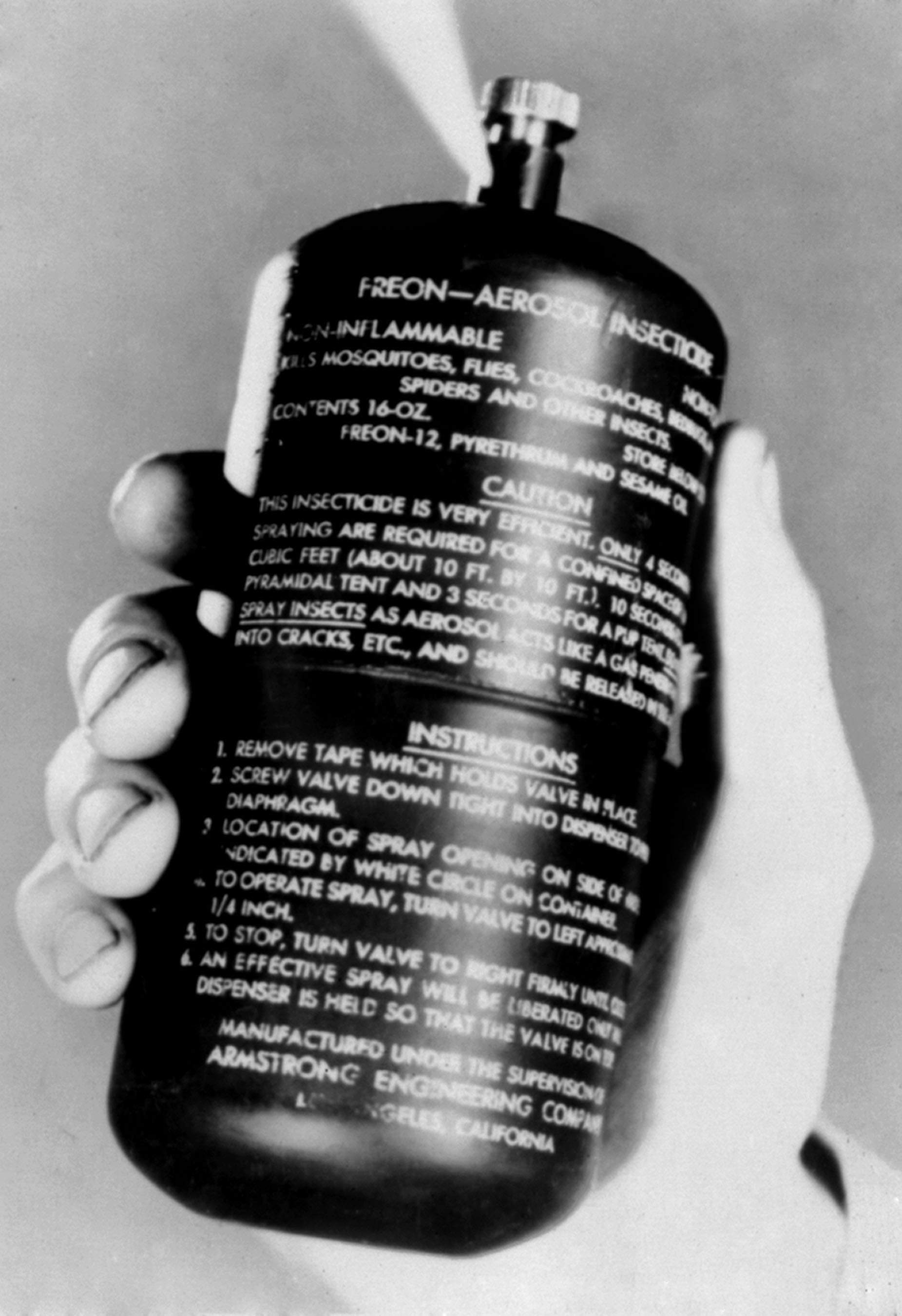
The turning point in the history of the spray can came during the Second World War. In 1943, researchers from the United States Department of Agriculture, Lyle Goodhue and William Sullivan, developed a portable aerosol system designed to nebulize insecticides. This device, funded by the U.S. government, made it possible to spray insecticides to protect soldiers from malaria‑carrying insects, which were particularly dangerous in the tropical areas where American troops were stationed. Thanks to this system, thousands of lives were protected from diseases transmitted by mosquitoes and other insects.
The Introduction of Spray Paint: Edward Seymour and 1949
At the end of the war, the aerosol can idea found new applications. In 1949, Edward Seymour, an American entrepreneur, had the intuition to adapt spray technology to contain paint. Seymour’s first spray paint was initially conceived as a demonstration for his customers: he wanted to show how aluminum‑based paint could be applied very easily to different surfaces. His invention was an immediate success, and Seymour decided to develop a commercial line of spray paints, paving the way for the widespread use of spray cans for artistic and professional purposes.
The Contribution of Robert H. Abplanalp: The Crimped Valve
Another key step for the mass commercialization of spray cans was the invention, in 1949, by American engineer Robert H. Abplanalp. Abplanalp patented a crimped valve, a key component that made the use of spray cans safer and more practical. This innovation greatly improved the functionality of aerosol devices and made it possible to mass‑produce spray cans, reducing costs and allowing the product to spread widely.
Mass Adoption in the 1950s and 1960s
With the introduction of low‑cost spray paints and the innovation of the valve, spray cans began to spread rapidly in the consumer market. In the 1950s and 1960s, the aerosol can became a widely used tool not only for paints and insecticides, but also for deodorants, cosmetic products, hair sprays and cleaners. Thanks to their practicality, these cans entered homes all over the world.
Spray Cans and the Environment: The Crisis of the 1970s
Despite their success, spray cans became embroiled in an environmental controversy in the 1970s. Traditional aerosols used CFCs (chlorofluorocarbons) as propellants, and various studies linked CFCs to damage to the ozone layer. This led to a series of international restrictions and to the banning of CFCs in aerosol products. Manufacturers were therefore forced to find safer alternatives, and in the following years they switched to less harmful propellants, such as hydrocarbons and compressed gases.
The Spray Can as a Tool of Artistic Expression
Over time, spray cans were adopted by artists as an expressive tool, giving rise to graffiti and street art culture. From the 1980s onwards, with the rise of the hip‑hop movement and urban art, spray cans became a symbol of creativity and rebellion. Thanks to their versatility and the wide range of available colours, spray cans allowed artists to work on large surfaces, transforming urban spaces into real open‑air canvases.
Recent Innovations and the Future of Spray Cans
Today, spray cans are sophisticated tools that include a wide range of paints, finishes and textures. Technological innovations have improved the control and precision of spray cans, offering interchangeable caps for different spray patterns and fast‑drying, weather‑resistant, low‑VOC products. In addition, growing environmental awareness has pushed companies to develop more eco‑friendly products, with natural propellants and low‑impact paints.
Conclusions
From war to fashion, from urban art to environmental protection, the spray can has undergone a rich series of transformations. From a simple insecticide container to a tool of creative expression, it now stands as an icon of practicality and innovation. Its evolution continues, with new solutions aimed at meeting environmental challenges and further improving performance across a wide range of applications.